
IRIS login | Reed College home Volume 94, No. 2: June 2015
Reediana
Public Memory in Early China
(Harvard University Asia Center, 2014)
Prof. Ken Brashier
In early imperial China, the dead were remembered by stereotyping them, by relating them to the existing public memory, and not by vaunting what made each person individually distinct and extraordinary in his or her lifetime. In Public Memory, Prof. Ken Brashier [religion 1998–] examines the phenomenon of postmortem remembrance, a process of pouring new ancestors into prefabricated molds or stamping them with rigid cookie cutters. He treats three definitive parameters of identity—name, age, and kinship—as ways of negotiating a person’s relative position within the collective consciousness, and examines both the tangible and intangible media responsible for keeping that defined identity welded into the infrastructure of Han public memory.
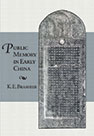
This is the second of two books Brashier has written for the Harvard-Yenching Institute Monograph Series. The first, Ancestral Memory in Early China, won honorable mention for the Levenson Prize in 2011. “It is an astoundingly powerful and erudite study that also makes for an enjoyable reading experience,” reports Carla Nappi, who interviewed Prof. Brashier for New Books in East Asian Studies. The book provides a history of the early Chinese ancestral cult, particularly its cognitive aspects. Ancestor worship was an idea system that aroused serious debates about the nature of postmortem existence, he says. It served as the religious backbone to Confucianism and may even have been the forerunner of Daoist and Buddhist meditation practices.

Editor's Note
Features
- Rediscovering a Master
- Cheating Heisenberg
- Woman for All Seasons
- Portland on the Take
- Life Beyond Reed
- Inside Job
- Two Seniors Nab Watsons
- Brilliant Surgeon, Tragic Accident
- Into the Unknown
Reediana
- Peyton Marshall ’96: Goodhouse
- Prof. Ken Brashier: Public Memory in Early China
- Thomas Burns ’98:
The Zen of Fulbright - Reediana Briefs
Eliot Circular
- Sphere of Influence
- Prez Gets Owl Fever
- Bio Prof Wins $444K Grant from NIH
- Class of ’14 Begins Quest for World Domination
- Tango Masters Tear It Up with Reed Orchestra
- Academic Freedom in a Learning Community
- Two Professors Earn Tenure
LATEST COMMENTS
steve-jobs-1976 I knew Steve Jobs when he was on the second floor of Quincy. (Fall...
Utnapishtim - 2 weeks ago
Prof. Mason Drukman [political science 1964–70] This is gold, pure gold. God bless, Prof. Drukman.
puredog - 1 month ago
virginia-davis-1965 Such a good friend & compatriot in the day of Satyricon...
czarchasm - 4 months ago
John Peara Baba 1990 John died of a broken heart from losing his mom and then his...
kodachrome - 7 months ago
Carol Sawyer 1962 Who wrote this obit? I'm writing something about Carol Sawyer...
MsLaurie Pepper - 8 months ago
William W. Wissman MAT 1969 ...and THREE sisters. Sabra, the oldest, Mary, the middle, and...
riclf - 10 months ago